Sleep, space, and city living
Choosing a Mattress for a NYC Apartment: Fit, Feel, and Material Trade-Offs
In a New York apartment, a mattress must satisfy two demanding occupants: the person who sleeps on it and the room that has to contain it. Before firmness, foam, or price enters the conversation, there are doors, turns in stairwells, narrow elevators, and the peculiar geometry of a bedroom that may also serve as an office, dressing room, or passageway.
Published October 19, 2026
Mattress shopping is often described as a search for the right feel. That is true, but incomplete. In a city apartment, the decision begins with a practical question: can the mattress get into the room, and once it is there, can the room still function? A bed that feels wonderful in a showroom may be a poor choice if it blocks a closet door, leaves no path to the window, or arrives too large to negotiate the building’s stairs.
These constraints do not make comfort less important. They make the order of operations more important. Measure first; compare materials and support next. Consider how you sleep, whether you share the bed, how warm you tend to feel at night, and what kind of maintenance you are willing to take on. The right choice is not necessarily the largest, most expensive, or most elaborately engineered mattress. It is the one that fits both the sleeper and the life around the bed.
Start with the apartment, not the showroom
A mattress’s printed dimensions describe the rectangle it occupies once it is in place. They say nothing about the route it must travel to reach the bedroom. In many NYC buildings, that route is the first test: the front entrance, lobby, elevator, stair landing, apartment doorway, and finally the bedroom turn. A mattress that compresses or rolls for delivery may be easier to bring upstairs, but packaging and delivery methods vary. Confirm the details for the exact model rather than relying on assumptions about a brand or mattress type.
Measure the narrowest points along the delivery route. Include doorways with doors open, elevator interiors, hallway corners, and any low ceiling or protruding handrail that could interfere. If there is no elevator, measure the stair width and landings; a straight measurement from one wall to another may not capture the difficulty of turning a bulky item between flights. Ask the seller or delivery provider what happens if the mattress cannot be brought into the apartment. It is a less glamorous question than choosing a comfort layer, but potentially a more consequential one.
Then measure the bedroom itself. Record the usable floor area, not just the room’s advertised dimensions. A radiator, column, closet door, window alcove, or slanted wall can make a nominally rectangular room less accommodating. Mark out the mattress footprint with painter’s tape or newspaper, including the bed frame if you plan to use one. Walk around the outline. Open drawers and closet doors. Check whether the route to the window remains clear and whether you can reach the bed without sidestepping furniture.
Do not forget height. A mattress placed on a tall foundation or frame can make a small room feel more crowded and can make getting in and out less comfortable. Conversely, a low platform may reduce under-bed storage that an apartment depends on. The mattress, frame, foundation, and any topper form one complete sleeping surface; measure the combined height and footprint before committing.
Choose a size that leaves the room usable
The familiar mattress sizes—twin, full, queen, and king—are useful starting points, not instructions. A queen can be an appealing compromise for one person who wants room to stretch or for a couple who can spare the floor area. A full may preserve circulation in a narrow bedroom, though two people may find its width restrictive. A king offers more personal space, but in a compact apartment it can turn the bed into the room’s central fact, leaving little room for anything else.
Think about clearance in practical terms. Can you make the bed without pinning yourself between the mattress and a wall? Is there room to stand beside it, open a wardrobe, or pull out a drawer? If one side of the bed must sit against a wall, consider whether that arrangement will work for the person sleeping there. In a shared bed, the number of inches between sleepers matters, but so does the route each person takes to get out of bed.
Space-saving decisions can be cumulative. A slightly smaller mattress might permit a narrower frame, which frees room for a desk or a clearer path to the closet. A storage bed might replace a dresser, but its drawers need clearance to open. A wall bed may serve a multipurpose room, though its mechanism and mattress requirements must be checked carefully. There is no universal winning layout; the useful question is whether the bed supports the room’s actual routines.
Support is personal; firmness is only a clue
Mattress labels such as “soft,” “medium,” and “firm” offer a rough vocabulary, not a scientific scale shared by every manufacturer. One company’s medium may feel quite different from another’s, and a sleeper’s experience depends on body shape, weight distribution, preferred position, and the mattress beneath the comfort layers. A firm surface is not automatically more supportive, just as a softer surface is not automatically more pressure-relieving.
Support is about how the mattress holds the body in a reasonably comfortable alignment. Pressure relief is about how it distributes contact at areas such as the shoulders and hips. These qualities overlap, but they are not identical. A side sleeper may appreciate enough cushioning to reduce pressure at the shoulder while still needing the waist and torso to feel supported. Someone who sleeps on their back may prefer a surface that supports the lower back without feeling rigid. Stomach sleepers often need to pay particular attention to whether the hips sink too far, though preferences and body mechanics differ.
If you share a bed, the decision becomes a small negotiation between two bodies, two schedules, and sometimes two definitions of “cool.” Try to assess the mattress together where possible. If that is not practical, identify the non-negotiables for each sleeper: firmness range, movement sensitivity, temperature comfort, or edge stability. Some mattresses reduce the sensation of a partner shifting more effectively than others, but the degree depends on the specific construction and model. Look for model-level information and, where available, an in-person trial.
A short showroom test can reveal obvious mismatches, but it cannot reproduce a full night. Ask about the trial period, return process, pickup arrangements, and fees before purchase. In an apartment building, removal may be as complicated as delivery. A generous-sounding return policy is most useful when its practical terms are clear.
Memory foam, latex, and coils: different kinds of response
Material names can make mattress shopping sound like a contest between substances. In practice, the complete design matters more than a single layer. Foam density, layer thickness, cover fabric, coil arrangement, ventilation, and the foundation beneath the mattress all contribute to the feel. Two beds described with the same broad material label may behave quite differently.
Memory foam
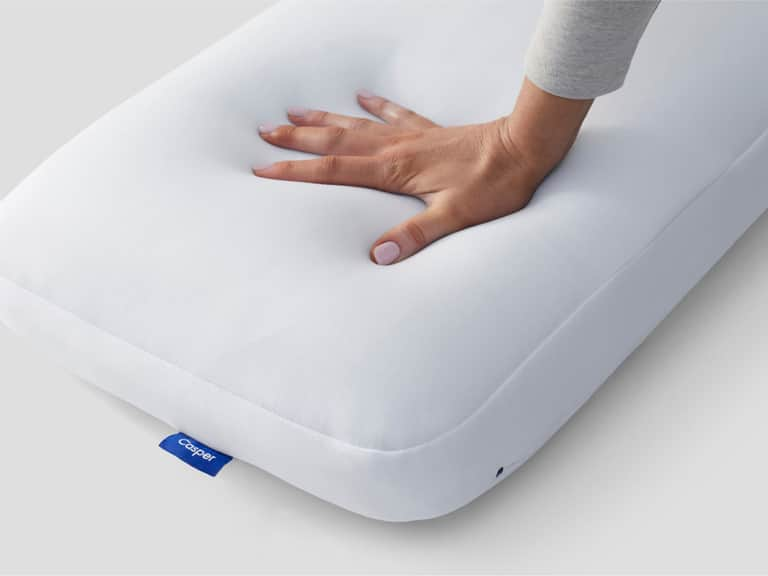
Memory foam is a viscoelastic material that generally responds gradually to pressure and warmth, contouring around the body rather than springing back immediately. Many sleepers enjoy its close cushioning and the way it can limit motion transfer across a shared surface. The slower response is not for everyone: some people prefer a surface they can move across more easily, while others may feel that a deeply conforming mattress makes changing position awkward.
Temperature deserves separate consideration. A foam mattress may retain more warmth than a highly ventilated construction, but “foam sleeps hot” is too simple a rule. Covers, foam formulation, layer design, bedroom temperature, bedding, and personal preference all matter. If you tend to overheat, ask what cooling claims refer to and whether they describe a measured result, a surface treatment, or a particular layer. A cooling label is a prompt for questions, not a guarantee of a cooler night.
Latex
Latex is often described as buoyant and responsive: it tends to push back more quickly than slow-response memory foam. Some sleepers like that resilient feel and the ease of changing positions. Latex can appear as a comfort layer or as part of a broader construction, and its feel depends on the specific formulation and design. Ask about the source and composition if those details matter to you; the word “latex” alone does not tell the whole story.
Innerspring and hybrid construction
Innerspring mattresses use a coil system for support, while hybrid designs combine coils with comfort layers that may include foam or other materials. Coils can create a more responsive feel and may allow airflow through parts of the mattress, while the upper layers determine much of the cushioning. Motion isolation, edge feel, and durability vary with the coil unit and the mattress as a whole, so these should be assessed for the particular model rather than inferred from the category name.
For a New York apartment, construction also has a logistical dimension. Some mattresses are delivered compressed, while others arrive in a different form. Materials and construction do not by themselves establish how easy a particular mattress will be to carry upstairs. Verify packaging, delivery, setup, and removal arrangements for the specific item and building.
Comparing Naturepedic and Aireloom
Naturepedic and Aireloom can serve as useful starting points when exploring different mattress options, but a comparison of two brand names is not a comparison of two single, uniform products. Each brand may offer multiple models, constructions, feels, and specifications. The relevant question is not which name wins in the abstract. It is how the exact models under consideration differ, and whether those differences matter to your sleep and your apartment.
With a Naturepedic model, examine the construction and material disclosures for that particular mattress. If organic or other material standards are important to you, identify the exact certification, what it covers, and which components it applies to. A broad description of a brand or product family should not be treated as a substitute for model-specific documentation. Also compare the mattress’s thickness, firmness options, foundation requirements, care instructions, and delivery format.
For an Aireloom model, approach the same details with equal care: layers, support system, profile, firmness choices, dimensions, and what the warranty actually covers. Brand reputation or a showroom impression cannot tell you whether a particular model will fit the stairwell, suit your sleeping position, or feel comfortable after several hours. Compare written specifications and policies alongside the in-person experience.
A useful side-by-side checklist includes the full model name, mattress height, available sizes, materials, recommended foundation, trial terms, delivery and setup, return costs, and warranty exclusions. If the models differ in construction, note the specific differences rather than reducing the choice to “natural versus luxurious,” or any other broad shorthand. The best comparison is concrete enough to answer the question you actually have: which bed fits this room, this body, and this budget?
A topper can change the feel, but not the foundation
A mattress topper can soften or add cushioning to an existing sleep surface, and may be worth considering when the mattress is structurally sound but feels too firm. It is not a dependable repair for a sagging or worn-out mattress. Before adding one, check that it will fit the bed and sheets, whether it can be secured, and how its materials may affect temperature and pressure relief.
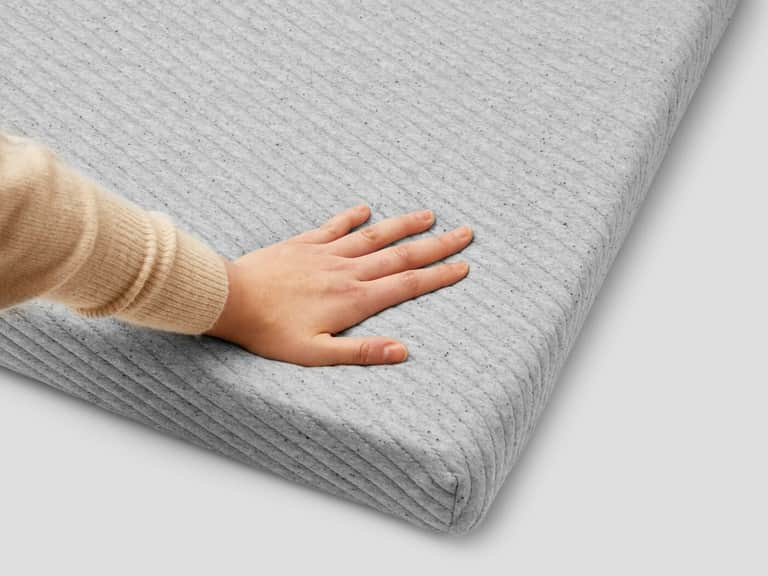
For example, the Comfy Mattress Topper is described as a two-layer foam construction with a plush responsive layer, memory foam support, and a quilted knit cover. Those are construction details to consider if you are looking for an additional cushioning layer. They do not establish that it will suit every mattress or sleeper. Check the topper’s dimensions and thickness against the mattress, fitted sheets, and bed frame, and consider whether extra height will make the bed awkward to enter or the room feel more crowded.
In a small apartment, accessories deserve the same scrutiny as the mattress. A topper that cannot be stored easily when not in use may be an inconvenience; one that changes the total bed height may affect bedside tables or the look and feel of the room. The goal is not to accumulate layers but to make a deliberate adjustment.
Heat, noise, and the city bedroom
Sleep comfort is shaped by more than the mattress. In a city bedroom, street noise, light from neighboring buildings, heating systems, and limited ventilation can all influence how the bed feels. The mattress cannot silence a siren or lower the room temperature, but its materials and cover may affect heat and pressure sensations. Consider the entire sleep environment before assigning every discomfort to the bed.
If you sleep warm, look at the mattress cover, bedding, room temperature, and the number of insulating layers in use. Breathable fabrics and lighter bedding may be useful adjustments, though individual results vary. If noise is the larger problem, curtains, a fan, or other environmental changes may matter more than switching from one mattress material to another. A mattress decision should be part of a broader plan for the bedroom, not a promise that one purchase will solve every disruption.
Also consider the foundation and floor. A mattress needs compatible support, and the bed frame should be stable and correctly sized. In some buildings, floors and walls transmit movement or sound more readily than expected. A squeaking frame or shifting foundation can undermine an otherwise comfortable mattress. Check the manufacturer’s foundation requirements and inspect the frame before assuming that the mattress is responsible for every unwanted sensation.
A practical decision sequence
It is easy to spend an afternoon comparing foam descriptions and still miss the most basic constraint. A more dependable process keeps the decision in order:
- Measure the delivery route. Check the building entrance, elevator or stairs, apartment doorway, and the turns between them.
- Map the bedroom. Include the bed frame, storage, closet doors, windows, and enough space to move around the bed.
- Choose a workable size. Balance sleeping space against circulation, storage, and the room’s other uses.
- Describe your needs. Note sleep position, preferred firmness, temperature comfort, movement sensitivity, and whether you share the bed.
- Compare exact models. Review construction, dimensions, foundation requirements, care, trial terms, warranty, and delivery arrangements.
- Plan for the outcome. Understand setup, old-mattress removal, returns, and any fees before the mattress arrives.
This sequence helps keep attractive marketing language in proportion. A claim about cooling, natural materials, or pressure relief may be worth investigating, but the details should be specific to the model. The room’s dimensions are not a marketing claim. Neither is the width of the stairwell.
Make room for the ordinary night
There is a tendency to treat mattress choice as a dramatic act of optimization: the perfect material, the ideal firmness, the decisive brand. In practice, the question is more modest and more useful. Does the mattress support a comfortable night for the people using it? Does it fit the building and leave the room livable? Can it be maintained, moved, or returned without an unpleasant surprise?
For a NYC apartment, a successful mattress is one that passes all three tests. It gets through the door. It feels right enough to sleep on night after night. And it leaves the room capable of being a room, rather than a mattress with a narrow perimeter of furniture. Measure carefully, compare the exact options, and give your own comfort more weight than a label. The city will supply enough variables without asking the bed to become another one.